
Build Outdoor Spaces That Extend Your Living Area
Decks, Porches & Outdoor Living Spaces in Rock Hill for backyards without shade, decks with loose boards, and porches that sag at the corners
Finch Construction builds and renovates decks, porches, and outdoor living spaces in Rock Hill for homeowners who need shaded seating areas, safe access to the yard, or elevated platforms that replace rotted framing. You may be stepping over deck boards that bounce underfoot, dealing with porch columns that lean away from the house, or planning a screened enclosure that keeps insects out while letting air move through. These projects include new deck construction, porch framing and roofing, screened-in conversions, and repairs that address structural movement, water damage, and failing fasteners before cosmetic work begins.
The work begins with setting footings below the frost line, pouring concrete piers, and bolting posts to galvanized brackets that prevent ground contact and wood rot. Joists are hung from a ledger board lag-bolted through the band board into floor framing, and joist spacing is calculated based on decking span ratings and whether the surface will support furniture, planters, or built-in seating. Railings require posts notched into the rim joist or bolted through blocking, and balusters are spaced to meet code limits that prevent small children from slipping through. Screened porches use treated lumber for sill plates, aluminum or fiberglass screen secured in routed channels, and a roof pitch that matches or complements the main house to keep water flowing away from the screen panels.
Contact Finch Construction to review your yard slope, door heights, and what type of outdoor space fits your lot layout in Rock Hill.
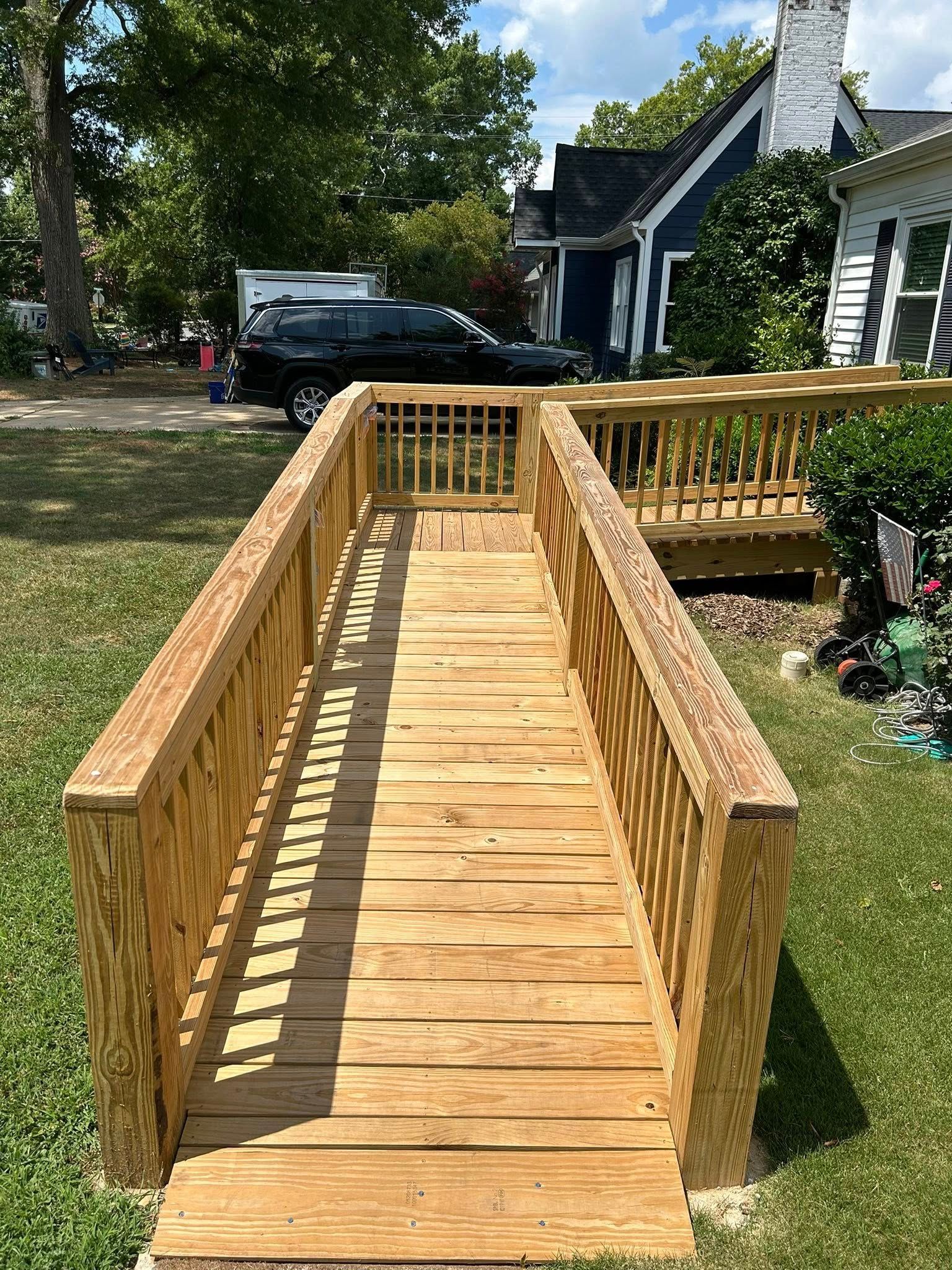
What You Will See from Footing to Final Staining
You will see concrete footings poured and leveled, posts plumbed and braced, and a ledger board flashed and fastened to the house before any joists are installed. Decking is fastened with hidden clips or stainless screws, boards are spaced to allow drainage and expansion, and all cut ends are sealed to prevent moisture entry. Stairs are built with stringer notches that meet tread depth and riser height codes, and handrails are mounted to return into the post or wall rather than ending abruptly.
After Finch Construction completes the build, you will notice a deck surface that feels solid without flex, railings that do not rack side-to-side, and stairs that do not creak under weight. A screened porch will have taut screen panels without wrinkles, a roof that sheds rain away from the foundation, and a ceiling height that allows overhead fans to circulate air. If the project included resurfacing an existing deck, new boards will sit flush with no raised edges, and the finish will penetrate evenly without pooling in low spots.
Covered patios may include post-and-beam framing, corrugated metal or shingle roofing, and integrated lighting or ceiling fans wired through weatherproof boxes. Deck repairs address joist rot, replace rim boards that have pulled away from the house, and sister damaged framing members before new decking is installed. The work does not include landscaping, irrigation system relocation, or gas line extensions for outdoor kitchens unless specified separately.
Questions About Framing, Fasteners, and Finishes
These questions cover structural requirements, material longevity, and maintenance considerations for decks and porches in Rock Hill.
What keeps deck ledger boards from pulling away from the house?
Lag bolts or structural screws are driven through the band board into floor joists, not just rim board or siding, and the ledger is flashed to prevent water from wicking into the connection.
How does joist spacing affect which decking materials can be used?
Composite decking typically requires joists sixteen inches on center or closer, while pressure-treated wood can span up to twenty-four inches depending on thickness and grain orientation.
When should a deck be stained or sealed after construction?
Pressure-treated lumber needs to dry for several months before it will accept stain, but you can apply a water repellent within weeks to slow checking and warping in Rock Hill sun exposure.
Why do porch columns sometimes settle unevenly?
If footings are not poured below the frost line or soil compacts under shallow pads, posts shift and the roof sags, pulling gutters out of alignment and cracking ceiling drywall inside screened sections.
How long does it take to build a new deck with stairs and railings?
A typical twelve-by-sixteen-foot deck with one stair run and perimeter railings takes seven to ten days, including footing cure time, framing, decking installation, and finish application.
If your deck boards flex underfoot, your porch columns lean, or you need a shaded outdoor space that extends your usable square footage, reach out to discuss what structural and finish work will bring the project up to code and match your use expectations.