
Add Square Footage Where Your Floor Plan Stops
Home Additions & Expansions in Rock Hill for homes running out of usable space, cramped bathrooms, and kitchens that cannot accommodate full appliance sets
Finch Construction manages home additions and expansions in Rock Hill for homeowners who have exhausted storage, need a separate master suite, or require a larger kitchen without relocating. You may be working around a single-bathroom layout that creates morning congestion, a kitchen peninsula that blocks through-traffic, or a garage that could be converted to conditioned living space but needs insulation, drywall, and climate control. These projects extend the building footprint, integrate new framing with existing roof and foundation systems, and bring the added space up to code for occupancy and energy performance.
The work begins with foundation layout, either a poured slab or frost-protected footings that match the depth of the existing foundation to prevent differential settlement. New floor joists are bolted or hung to the existing band board, and roof rafters or trusses are tied into the current structure using hurricane straps and structural screws. Wall removal between old and new spaces requires a flush beam to carry the roof load, and any changes to exterior walls involve flashing, weather barriers, and vapor control layers that overlap with the original envelope. Permits cover foundation, framing, electrical, plumbing, HVAC, and insulation, with inspections scheduled at each phase before drywall closes in the walls.
Contact Finch Construction to review your lot lines, setback limits, and what your current foundation system can support for an addition in Rock Hill.
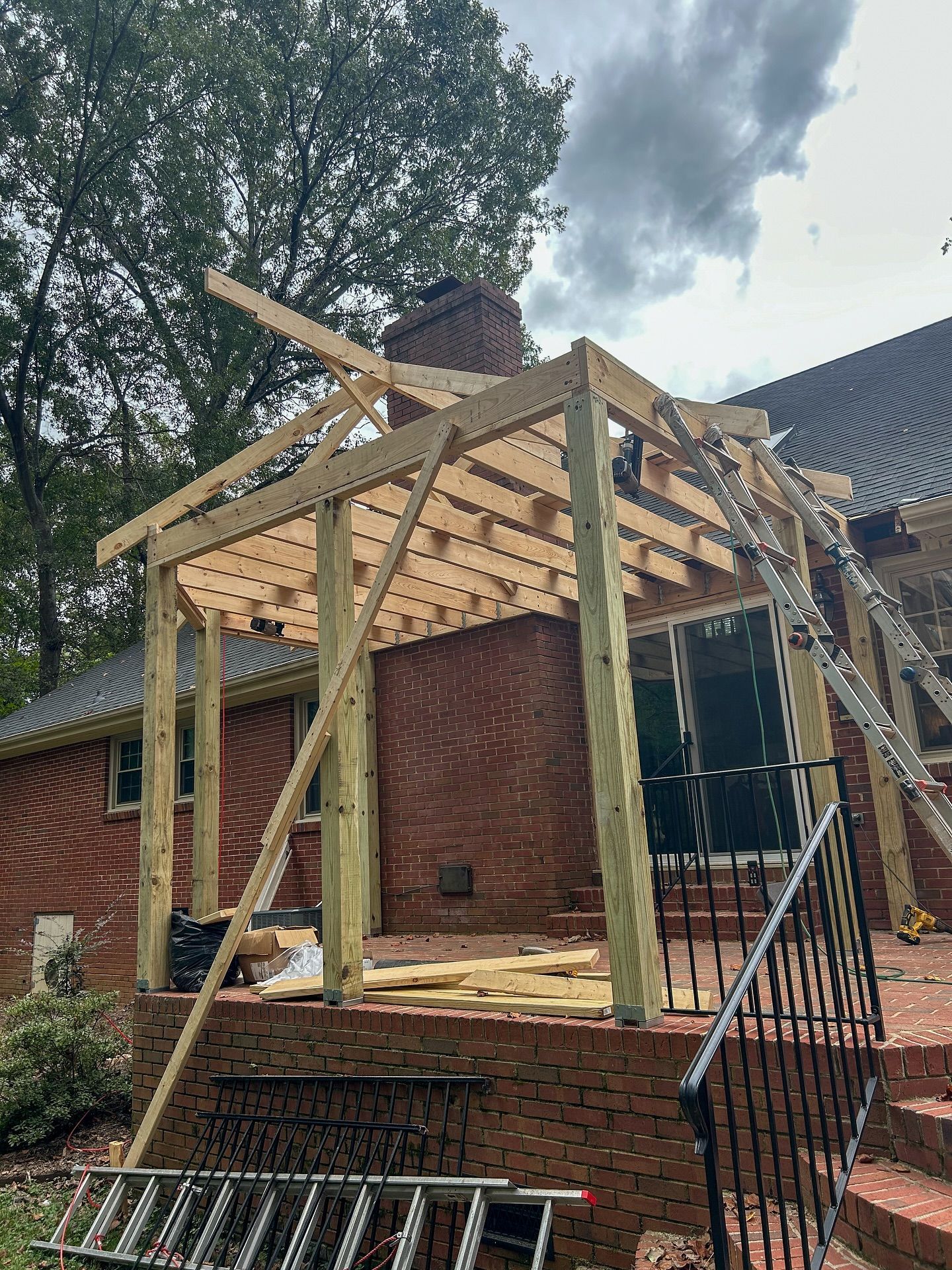
How Additions Integrate with Your Existing Home
You will see the foundation poured and cured, floor framing bolted to the existing structure, and exterior walls sheathed and wrapped before roofing begins. The new roof section is woven into the existing shingles or flashed along the valley where planes meet, and insulation is installed to match or exceed the performance of the original building. Electrical panels may require a service upgrade to handle the added load, and HVAC systems are extended with new ductwork or supplemented with a separate zone.
After Finch Construction completes the expansion, you will notice new rooms that maintain the same ceiling height and flooring level as adjacent spaces, trim that matches existing profiles, and paint colors that blend or intentionally contrast based on your selection. The addition will feel conditioned year-round, with no drafts along the seam where old and new walls meet. Doorways between spaces will be framed to standard heights, and any flooring transitions will sit flush without lips or gaps.
Code compliance includes egress windows in bedrooms, AFCI or GFCI protection on new circuits, and insulation values that meet current energy standards even if the existing home was built under older codes. Structural integration is verified by the local building inspector, and final approval allows the space to be legally occupied. The work does not include landscaping restoration, septic system expansion, or utility tap fees unless arranged separately.
What to Know Before Breaking Ground
These questions address permitting, structural connections, and system upgrades common to home additions in Rock Hill.
What determines whether a foundation needs footings or a slab?
Frost depth, soil bearing capacity, and whether the addition includes a basement or crawlspace dictate footing design, with clay soils often requiring deeper footings than sandy sites.
How is the new roof tied into the existing structure?
Rafters or trusses are face-nailed to a ledger board bolted through the existing sheathing into wall studs, and valleys are lined with ice-and-water shield before shingles are woven or cut in.
When does an addition require a separate HVAC zone?
If the added square footage exceeds twenty percent of the existing conditioned area, a single system may not maintain temperature evenly, especially in Rock Hill homes with limited attic space for extended ductwork.
Why do permits take longer for additions than interior remodels?
Additions involve zoning review for setbacks, lot coverage, and height limits, plus sequential inspections for foundation, framing, insulation, and final occupancy that cannot be combined.
How long does a typical room addition take from permit to final walkthrough?
A single-room addition with a simple roof tie-in and no utility upgrades typically takes eight to twelve weeks, including permit approval, foundation cure time, and inspection intervals.
If your home no longer accommodates your household size or daily routines, reach out to discuss how an addition can be designed and permitted to integrate with your current structure and lot layout.