
Replace Outdated Bathrooms with Functional Design
Shower & Tub Upgrades in Rock Hill for tubs that trap water, crack along seams, or limit mobility
Finch Construction handles shower and tub upgrades in Rock Hill for homeowners dealing with dated fixtures, limited accessibility, or failing enclosures that let water pool on tile edges. You may be working around a tub that no longer drains cleanly, stepping over a high threshold that creates a fall risk, or standing in a fiberglass insert with visible cracks spreading from the drain. These upgrades replace those failing systems with walk-in showers, freestanding soaking tubs, or tub-to-shower conversions built to fit your floor plan and daily use.
The work begins with removing the old tub or surround, inspecting the subfloor and wall framing for rot or movement, and addressing any water damage before new materials go in. Custom tile showers use cement board backing, waterproof membrane layers, and sloped mortar beds that direct water toward the drain without pooling. Glass enclosures mount to solid blocking inside the wall, and freestanding tubs require dedicated supply lines and waste assemblies positioned during the rough-in phase. Walk-in designs eliminate curbs, widen door openings, and add grab bars anchored to structural framing rather than drywall alone.
Reach out to discuss your current layout and what you need the new tub or shower to accommodate in your Rock Hill home.
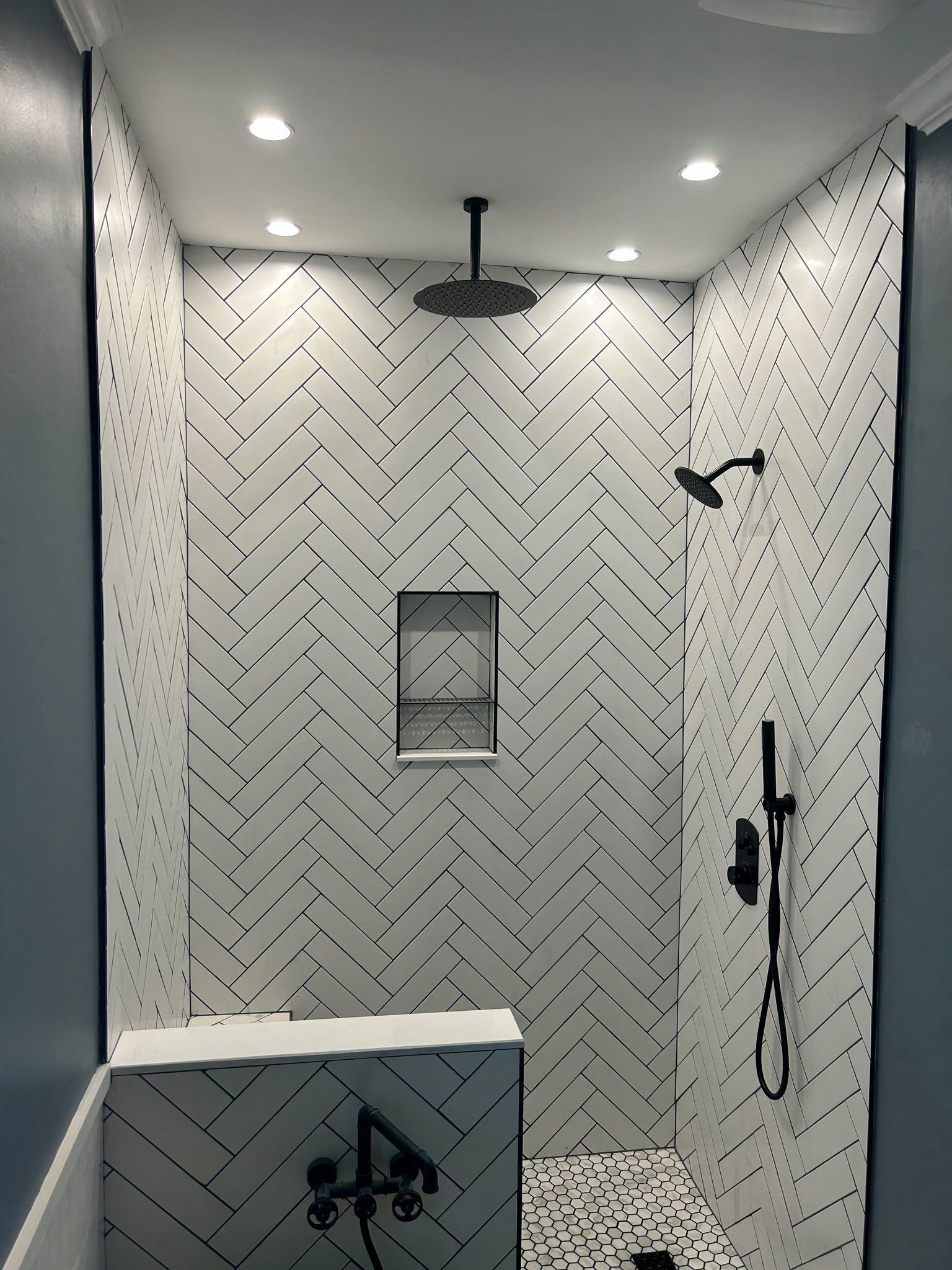
What Changes Between Demolition and Final Tile Work
You will see the existing tub removed, the alcove stripped to studs, and any damaged wood replaced before waterproofing begins. Cement board goes up on all wet walls, seams are taped and sealed, and a liquid membrane coats corners, seams, and the entire shower pan. The drain assembly is tested under pressure before tile work starts, and grout lines are sealed after the tile cures to prevent water from reaching the substrate.
Once Finch Construction completes the install, you will notice water flowing cleanly to the drain without collecting in corners, glass doors that close without gaps, and tile joints that remain dry between uses. The floor will slope evenly, the showerhead will mount to solid backing without flexing, and grab bars will hold full weight without pulling loose. If you chose a tub-to-shower conversion, the new threshold will sit flush with the bathroom floor or include a beveled entry that removes the step entirely.
Accessibility upgrades include benches built into the tile layout, handheld shower wands with slide bars, and slip-resistant floor treatments that do not compromise the waterproof layer. Surrounds extend to the ceiling in full wet areas, and any recessed niches are set into the wall cavity with their own waterproof pan. The work does not include plumbing relocation beyond standard fixture replacement or structural changes that alter the room footprint.
What to Expect from Planning to Grouting
The following questions address common concerns during shower and tub upgrade projects in Rock Hill, from material selection to final caulking.
What controls whether a tub-to-shower conversion can remain in the same footprint?
The existing drain location, joist span, and whether your floor structure can support a mortar bed or pre-sloped pan without reinforcement determine if the layout stays as-is or requires framing adjustments.
How does tile choice affect water management in a custom shower?
Large-format tiles reduce grout joints where water can penetrate, but they require flatter substrate prep and wider trowel notches to prevent voids that trap moisture under the tile.
When should grab bars be planned rather than added later?
Blocking must be installed between studs during framing, before drywall or tile goes up, because surface-mount bars anchored only to tile will pull out under load.
Why do glass enclosures need caulk along the bottom track?
Even with a sloped sill, water can wick under the aluminum channel if the joint is not sealed, leading to staining and slow leaks into the floor below.
How long before a newly tiled shower can be used?
Grout needs 72 hours to cure before sealing, and the sealer requires another 24 hours to set, so plan for four days from final grouting to first use in Rock Hill homes with standard humidity levels.
If you are ready to remove a tub that no longer serves your household or replace a shower surround that traps water along the edges, contact Finch Construction to review the existing layout and confirm what the space can support.