
Update the Outside to Protect What Is Inside
Exterior Home Renovations in Rock Hill for siding that warps after rain, windows that fog between panes, and paint that peels below the roofline
Finch Construction handles exterior home renovations in Rock Hill for homeowners dealing with siding that pulls away from corners, windows that no longer latch tightly, or paint finishes that blister and crack from moisture trapped behind the coating. You may be replacing fiber cement panels that have swelled along the bottom edge, upgrading single-pane windows that sweat on the inside during winter, or repainting trim boards that show bare wood where caulk has failed. These projects restore the weather barrier, improve thermal performance, and reset curb appeal by addressing both cosmetic wear and the underlying material failures that let water in.
The work begins with removing damaged siding back to the sheathing, checking for rot in the wall framing, and replacing any compromised studs or rim boards before new material goes up. Siding installation includes a weather-resistant barrier over the sheathing, flashing around windows and doors, and staggered seams that shed water without creating vertical channels. Window upgrades require shimming the frame level and square, sealing the rough opening with foam or backer rod, and applying a sloped sill pan that directs water outward. Exterior painting starts with scraping loose coatings, sanding to bare wood where blisters appear, priming all raw surfaces, and applying two finish coats rated for UV and moisture exposure common to Rock Hill.
Reach out to schedule a walkthrough of your home's exterior and identify which materials need repair or replacement before the next storm season in Rock Hill.
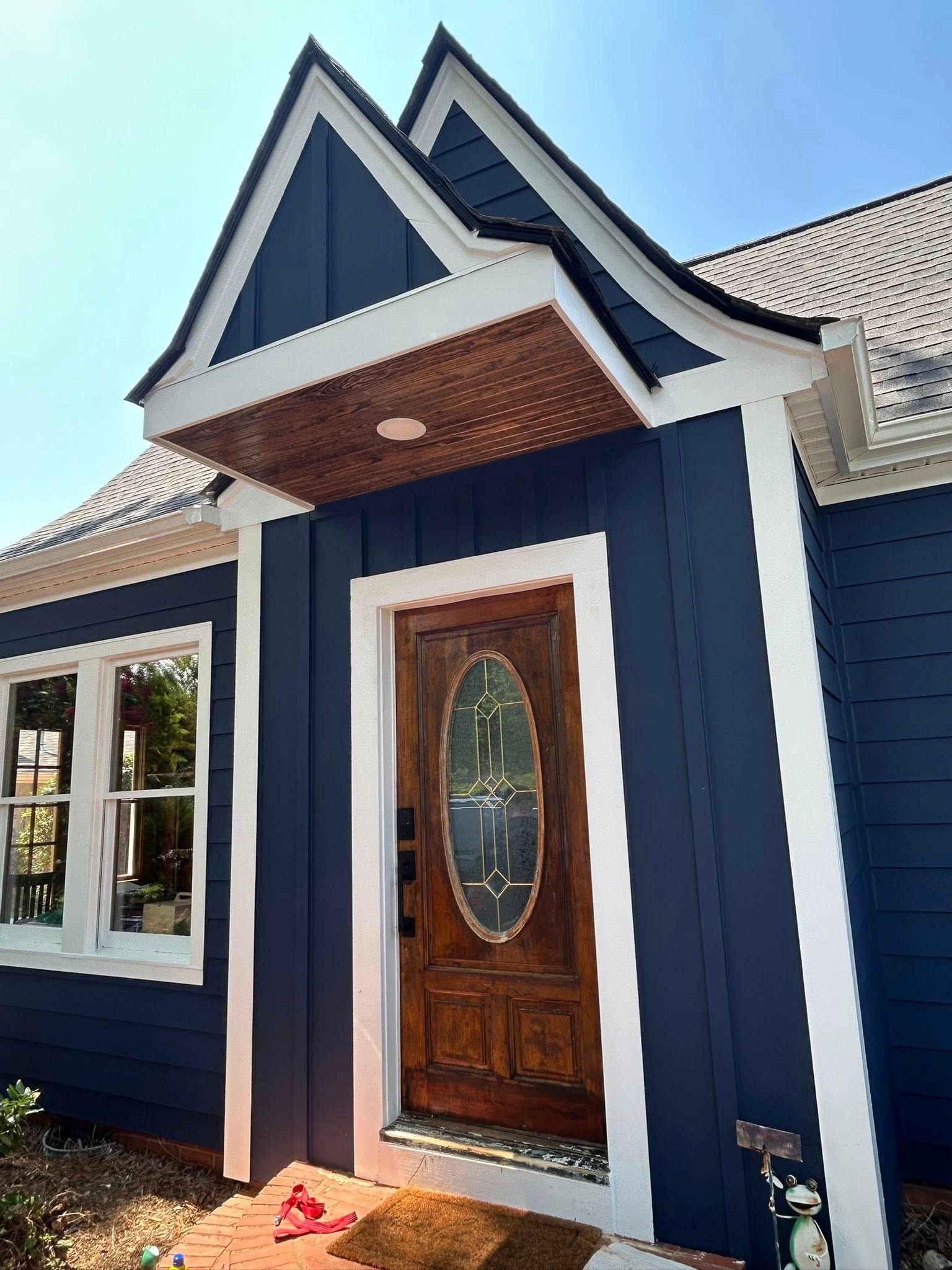
What Changes Between Tear-Off and Final Caulking
You will see the old siding removed in sections, any damaged sheathing replaced, and a moisture barrier stapled and taped over the wall before the first new panel is fastened. Windows are set into the opening with shims behind the side jambs, screwed through the fin into the framing, and flashed with peel-and-stick membrane that overlaps the barrier below and tucks under the barrier above. Trim boards are primed on all six sides before installation, and joints are caulked before the final paint coat is applied.
After Finch Construction finishes, you will notice siding seams that close tightly without gaps, windows that open and lock without force, and paint that adheres evenly without bubbling or flaking. Water will run off the siding face and away from the foundation, trim corners will remain sealed through temperature swings, and any replaced boards will match the profile and reveal of the existing material. Upgraded windows will eliminate interior condensation and reduce heat gain during summer afternoons.
Weather-resistant upgrades include impact-rated windows in high-wind areas, wider roof overhangs where eaves protect siding from direct rain, and fiber cement or engineered wood products that resist rot better than standard pine trim. Outdoor living space enhancements may involve adding covered entryways, installing shutters or decorative brackets, and coordinating paint colors across siding, trim, and doors. The work does not include roof replacement, gutter installation, or grading changes unless specified separately.
Answering Common Questions About Siding, Windows, and Paint
These questions address material choices, installation details, and maintenance expectations for exterior renovations in Rock Hill.
What causes siding to warp along the bottom edge?
Capillary action pulls ground moisture into the bottom of fiber cement or wood siding if the clearance to soil or mulch is less than six inches, causing the material to swell and buckle.
How are replacement windows flashed to prevent leaks?
A sill pan goes in first, side flanges are sealed to the moisture barrier, and a head flashing tucks under the barrier above so water always flows over the next lower layer without entering the wall.
When should exterior paint be stripped instead of painted over?
If the existing coating has more than two layers, shows alligatoring, or traps moisture that causes blistering, stripping to bare wood and resealing prevents future failures.
Why do some trim boards need back-priming?
Unsealed wood absorbs moisture from behind, causing the face coating to peel, so priming all sides before installation keeps the board stable and the paint intact longer in Rock Hill humidity.
How long does a full exterior renovation take on a single-story home?
Siding replacement, window installation, and exterior painting typically require three to four weeks, depending on weather delays and the number of windows being upgraded.
If your siding shows warping, your windows no longer seal properly, or your paint fails within a year of the last coat, contact Finch Construction to identify what is allowing water into the wall and what it will take to restore the exterior envelope.